Transparency Is Harder Than It Looks
An optical window seems deceptively simple. Two flat surfaces, a clean substrate, perhaps a coating, and light passes through. Yet the difference between a window that merely transmits and one that preserves the integrity of the wavefront is measured in nanometers. A window with 1 lambda surface flatness distorts a collimated beam; one with poor parallelism introduces wedge-induced steering errors that shift focal spots off their detectors.
At Eata Ray, we fabricate optical windows exclusively for research and instrumentation applications where the window is not a passive cover but an active optical element. From UV-grade fused silica for excimer laser systems to sapphire viewports for high-pressure reaction chambers, our processing pipeline delivers the surface quality, parallelism, and transmitted wavefront performance your experiment demands.
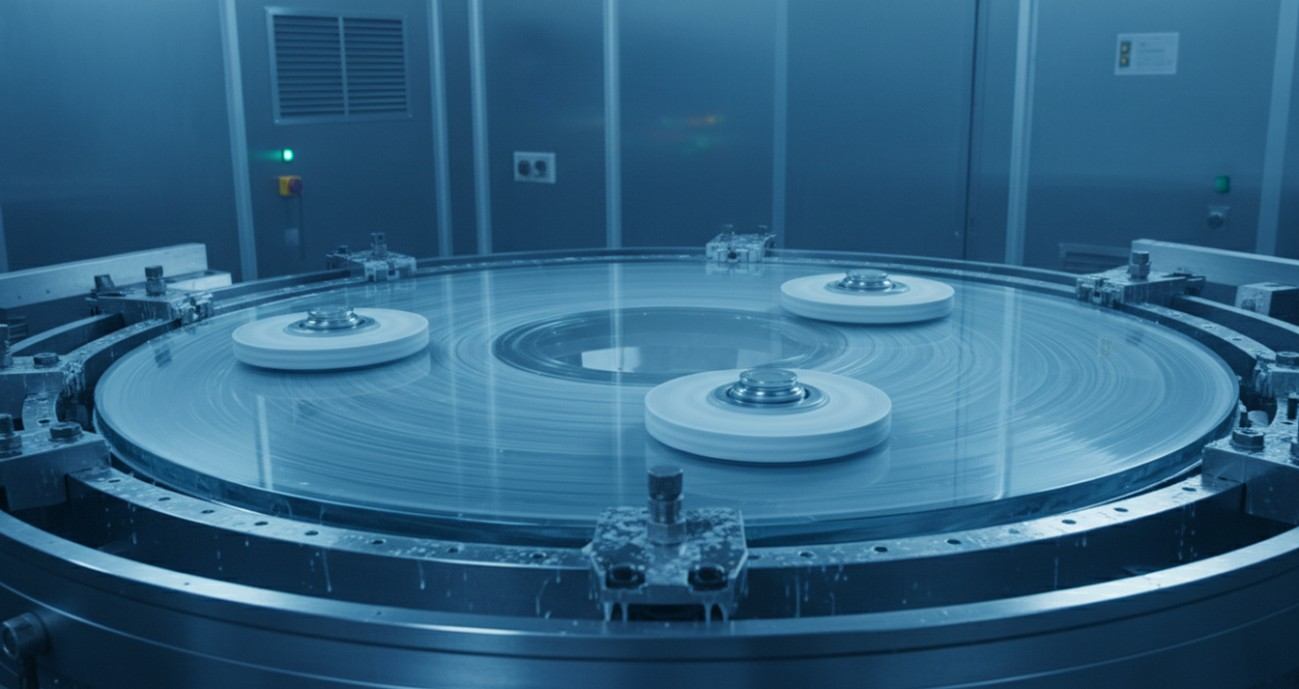 Figure 1. Double-sided planetary polishing of large-diameter optical windows on a precision lap.
From Raw Blank to Functional Window
Optical window fabrication is a discipline of parallelism and planarity. Unlike lenses or mirrors, where curvature is the primary figure of merit, a window must simultaneously satisfy flatness on both faces, parallelism between those faces, and minimal transmitted wavefront distortion across the clear aperture. Our facility addresses all three with a coordinated processing chain.
Double-Sided Grinding and Lapping
The foundation of a precision window is established through simultaneous material removal from both surfaces. Double-sided lapping machines hold the blank between two rotating platens, using abrasive slurry to grind both faces in a single operation.
- Simultaneous processing ensures uniform thickness across the part, minimizing total thickness variation (TTV) before polishing even begins.
- Controlled pressure and rotation speed distribute material removal evenly, preventing the warping and bowing that single-sided processes can introduce in thin substrates.
- In-process thickness gauging provides real-time feedback, allowing the operator to converge on target dimensions without removing the part from the machine.
Precision Polishing for Surface Figure
Once lapped to near-final thickness, the window must be polished to achieve the required surface flatness and roughness. We deploy both double-sided and single-sided polishing strategies depending on specification level and substrate geometry.
- Double-sided polishing (DSP) finishes both faces simultaneously on planetary laps, achieving excellent parallelism and moderate flatness for imaging windows and protective covers.
- Single-sided pitch polishing is reserved for the most demanding applications, where each face must reach lambda/20 flatness or better. The semi-malleable pitch surface flows under pressure, conforming to microscopic irregularities and producing atomic-level smoothness with roughness below 3 angstroms RMS.
- For thin windows below 1 millimeter, specialized tooling and reduced pressure regimes prevent edge roll and mid-spatial-frequency ripple that would otherwise compromise flatness.
 Figure 2. An optical window transmitting a collimated laser beam with minimal wavefront distortion, preserving beam quality for downstream optics.
Substrate Material Selection
The choice of substrate material determines the spectral transmission band, thermal stability, mechanical durability, and chemical resistance of the finished window. We maintain supply chain relationships across the full spectrum of optical materials to match your operating environment.
- UV-grade fused silica offers transmission from 180 nanometers through the near-infrared, with extremely low autofluorescence and thermal expansion. It is the default choice for ultraviolet spectroscopy, excimer laser systems, and precision metrology where material purity matters.
- Sapphire, second only to diamond in hardness, provides exceptional scratch resistance and broadband transmission from UV to mid-infrared. Its mechanical strength makes it ideal for viewports in abrasive environments, high-pressure cells, and aerospace sensors.
- N-BK7 and other borosilicate glasses deliver cost-effective visible-range performance for imaging windows, camera protective covers, and general laboratory applications where ultraviolet transmission is not required.
- Infrared crystals including germanium, silicon, zinc selenide, and calcium fluoride extend transmission into the thermal infrared for thermal imaging, FTIR spectroscopy, and CO2 laser systems.
- Specialty materials such as magnesium fluoride for vacuum ultraviolet, barium fluoride for broad mid-infrared coverage, and chalcogenide glasses for molded aspheric windows are available for frontier applications.
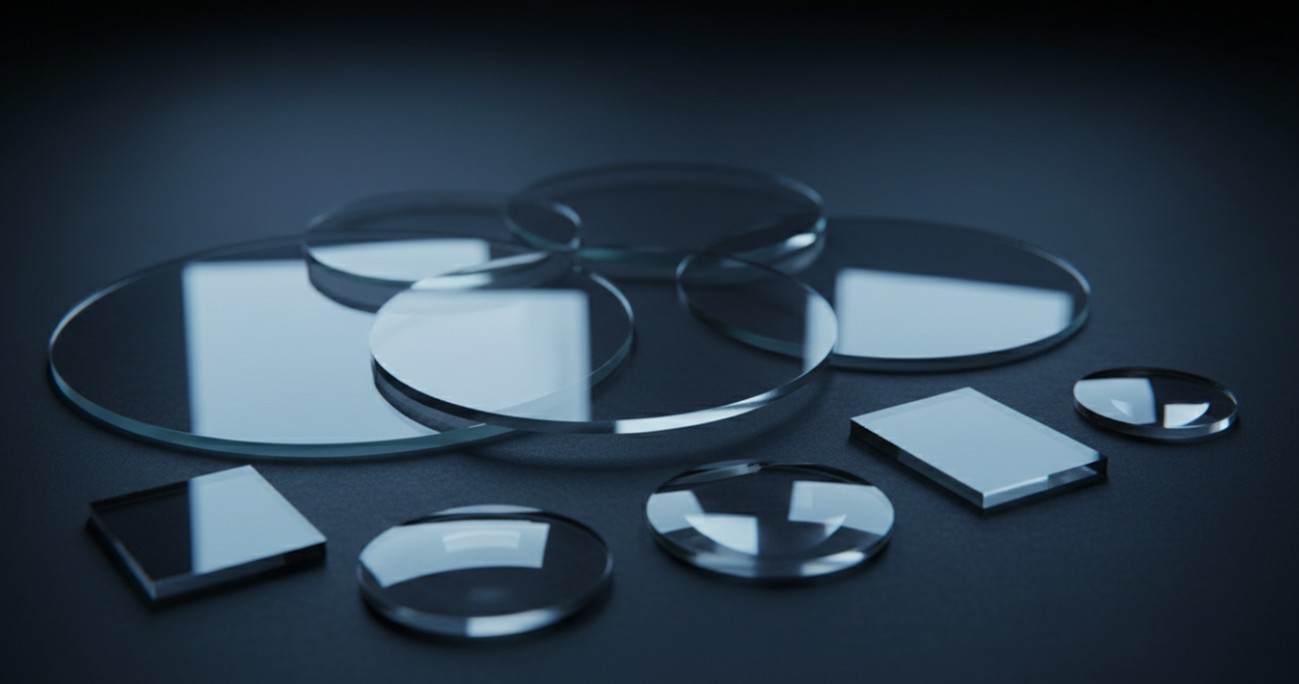 Figure 3. A selection of precision-fabricated optical windows in various sizes, shapes, and substrate materials.
Anti-Reflection and Functional Coatings
An uncoated window reflects approximately 4 percent of incident light at each surface. In a multi-element system, these losses compound rapidly. Our in-house coating capability transforms the polished substrate into a high-efficiency optical element.
- Broadband anti-reflection coatings increase transmission to over 99 percent across wide spectral bands, from UV through visible to near-infrared, with reflection suppressed below 0.5 percent per surface.
- V-coat and laser-line AR coatings optimize performance at specific wavelengths such as 532 nanometers, 1064 nanometers, or 1550 nanometers, achieving reflection below 0.25 percent for maximum laser throughput.
- Dual-band and multi-band AR coatings maintain high transmission at widely separated wavelengths simultaneously, a common requirement for fluorescence microscopy and pump-probe spectroscopy.
- Protective coatings including diamond-like carbon (DLC) and hydrophobic layers enhance durability in harsh environments without compromising optical transmission.
- Indium tin oxide (ITO) coatings provide transparent electrical conductivity for electro-optic modulators and touch-panel-integrated windows.
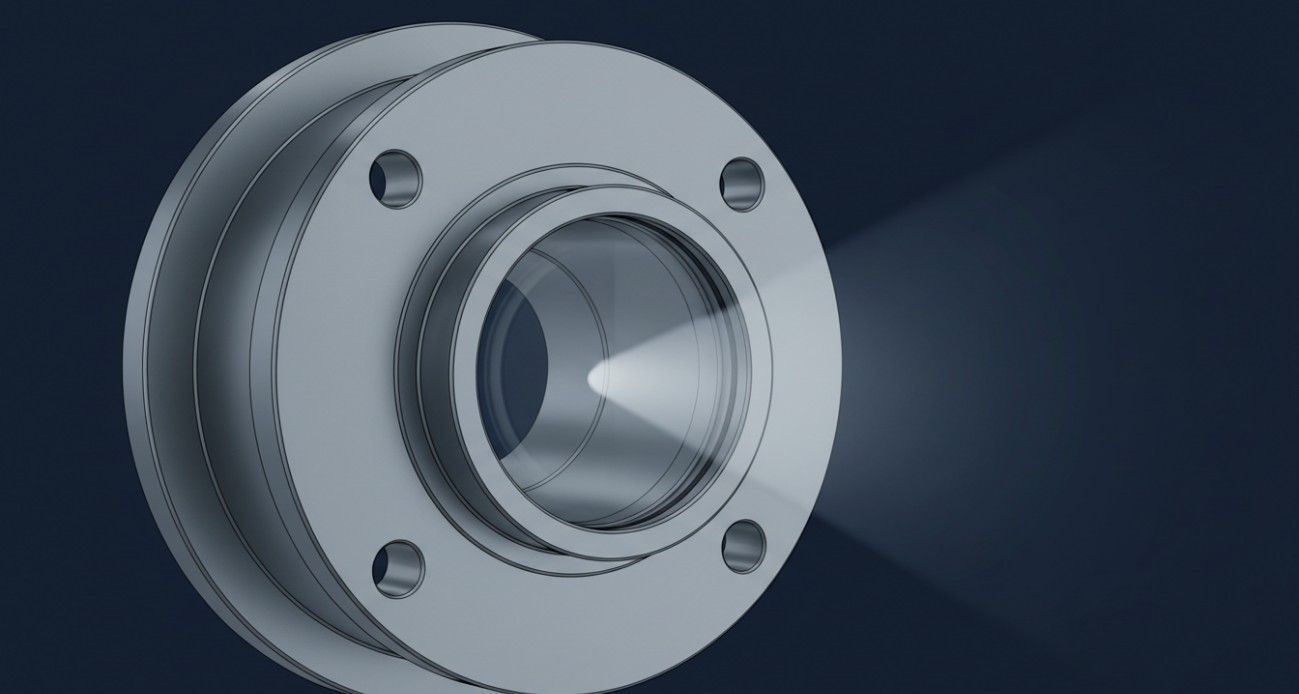 Figure 4. A vacuum viewport optical window hermetically sealed into a stainless steel flange, providing optical access to ultra-high vacuum chambers.
Specifications and Achievable Tolerances
The parameter space for research-grade optical windows spans dimensions, materials, and optical tolerances. The matrix below summarizes the ranges we routinely achieve within our standard processing workflows.
| Parameter |
Range / Options |
Notes |
| Dimensions |
3 mm to 300 mm diameter |
Rectangular and custom shapes available |
| Thickness |
0.1 mm to 50 mm |
Ultra-thin windows below 0.5 mm via specialized tooling |
| Dimensional Tolerance |
±0.05 mm to ±0.25 mm |
Tighter tolerances on precision grade |
| Surface Flatness |
λ/4 to λ/20 @ 632.8 nm |
λ/20 via single-sided pitch polishing |
| Surface Roughness |
< 3 Å RMS (super polish) |
Standard 1-3 nm RMS for visible applications |
| Surface Quality |
40-20 to 10-5 scratch-dig |
Per MIL-PRF-13830B |
| Parallelism |
< 1 arcmin to < 5 arcsec |
Goniometer-verified |
| Total Thickness Variation |
< 1 µm to < 10 µm |
Critical for etalon and cavity applications |
| Wedge Angle |
0 to 30 arcmin, custom |
Introduced to steer ghosts out of field |
| Coating Options |
BBAR, V-coat, dual-band, ITO, DLC |
IBS and ion-assisted deposition |
| Coating Wavelength |
190 nm to 15 µm |
UV, VIS, NIR, MWIR, LWIR bands |
Research Applications We Enable
Optical windows fabricated at Eata Ray have found their way into instruments pursuing measurement frontiers across the electromagnetic spectrum. Representative application domains include:
- Laser systems and resonators: Fused silica and sapphire windows with lambda/10 flatness and super-polished surfaces for high-power laser beam paths, cavity output couplers, and harmonic separation.
- Spectroscopy and spectral imaging: Broadband AR-coated windows for UV-visible-NIR spectrometers, FTIR sample compartments, and hyperspectral imaging cameras where minimal spectral ripple is essential.
- Vacuum and cryogenic systems: Hermetically sealed viewports with Kovar-matched glass for ultra-high vacuum chambers, cryostats, and molecular beam epitaxy systems, maintaining vacuum integrity across thermal cycling.
- Microscopy and bioimaging: Ultra-thin coverslip windows with sub-micron thickness tolerance for high-NA oil-immersion objectives, light-sheet fluorescence microscopes, and multiphoton tissue imagers.
- Semiconductor process monitoring: Sapphire and fused silica viewports for plasma etchers, deposition chambers, and lithography tools, tolerating aggressive chemistries and thermal transients.
- Aerospace and remote sensing: Germanium and silicon windows with DLC coatings for infrared thermal imagers, multispectral earth-observation payloads, and LIDAR receiver assemblies.
Metrology as a Fabrication Partner
In window fabrication, measurement serves two purposes: it validates the finished component, and it guides the polishing process toward convergence. Our metrology suite supports both roles.
Phase-shifting interferometers map surface flatness and transmitted wavefront error with nanometer resolution, revealing the low-order figure deviations that matter for collimated beam propagation.
White-light optical profilers and atomic force microscopy quantify surface roughness and mid-spatial-frequency texture, ensuring that super-polished windows meet the scatter requirements of high-power laser and ultraviolet systems.
Goniometers and optical comparators verify parallelism and wedge angle to arcsecond precision, confirming that the window will not introduce angular beam steering when installed at non-normal incidence.
Spectrophotometers characterize coating performance across the design band, validating that transmission, reflection, and absorption match the theoretical design.
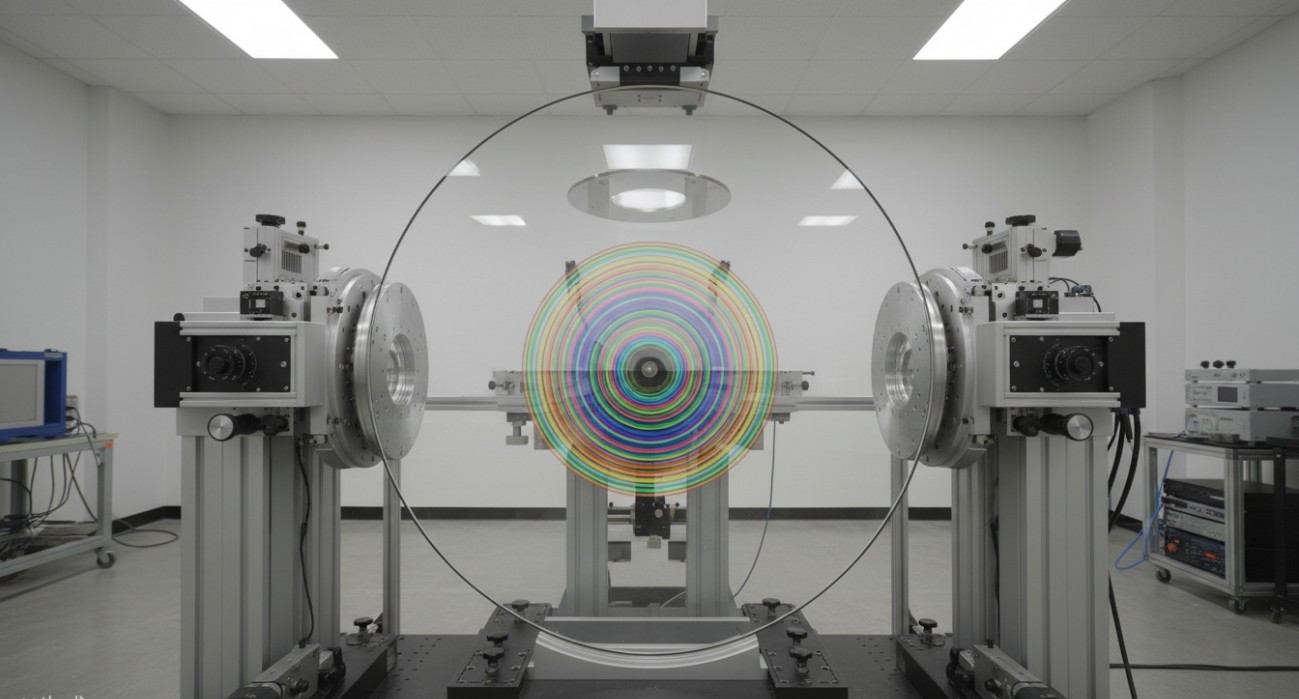 Figure 5. Phase-shifting interferometric testing of a large optical window, capturing circular interference fringes that reveal nanometer-level surface deviations.
Collaborative Engagement
Research windows are rarely catalog items. The combination of material, dimensions, flatness, parallelism, and coating must be tailored to the optical system in which the window will serve. Our engagement process is built around that specificity.
- Technical Dialogue: Share your operating wavelength, power density, environmental conditions, and any constraints on dimensions or mounting. If you have an existing drawing, we review it for manufacturability and tolerance achievability.
- Material and Process Recommendation: Our engineers recommend the substrate material and fabrication route best suited to your specification. We also advise on coating options based on spectral requirements and environmental exposure.
- Prototype Fabrication: For novel designs or first-time material selections, a prototype window allows you to validate transmitted wavefront performance, coating spectral response, and mechanical fit before scaling up.
- Comprehensive Characterization: Each finished window is fully characterized according to its specification level. You receive interferometric surface maps, roughness profiles, parallelism verification, and coating spectral scans.
- Integration Support: Our role extends beyond shipment. We remain available to advise on mounting methodology, thermal expansion compensation, cleaning protocols, and re-coating strategies.
Begin with Your Specification
If your research requires a window that preserves wavefront integrity under demanding conditions, we would welcome the opportunity to discuss your requirements. Every specification is evaluated on its own technical merits, and there is no minimum order barrier for research collaborations.
Send us your window requirements and receive a tailored technical assessment outlining achievable tolerances, recommended materials, coating options, and a path from blank to finished component.


